
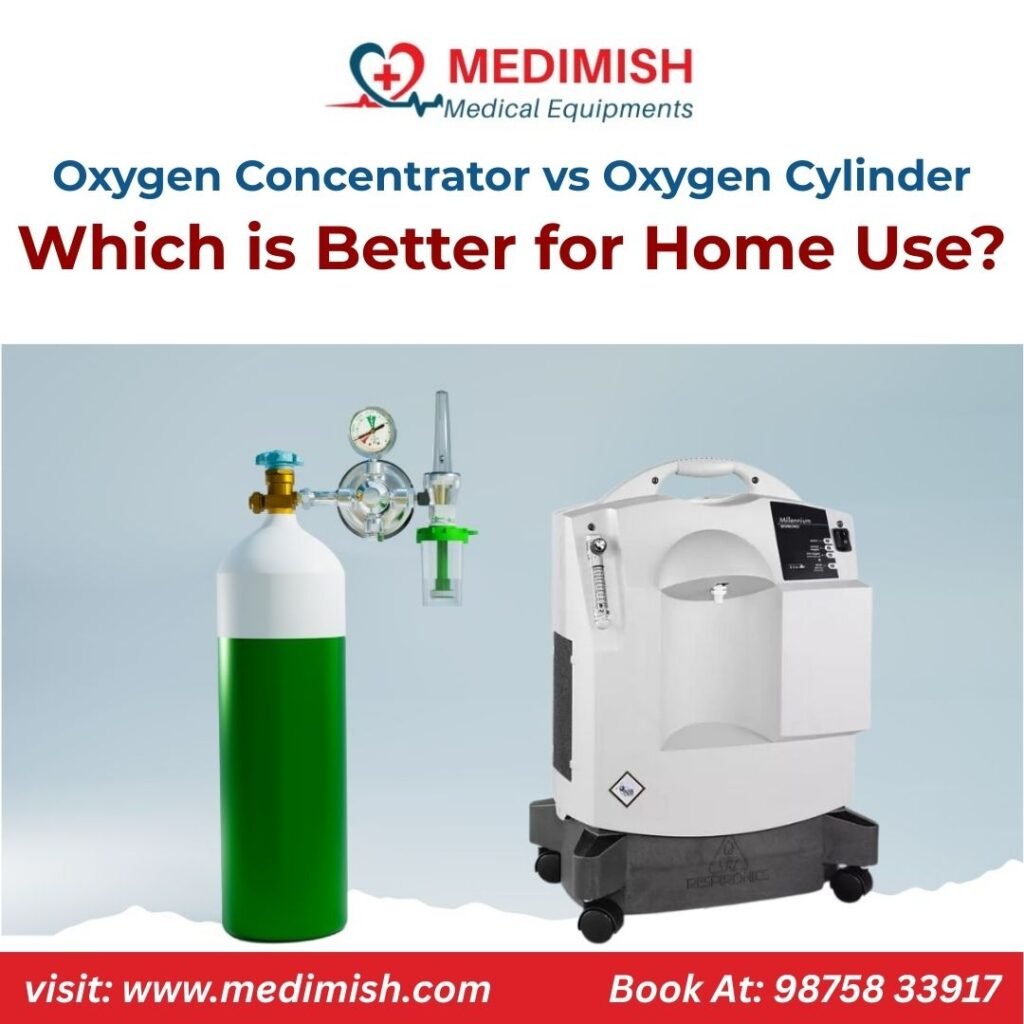
Oxygen Concentrator vs Oxygen Cylinder – Which is Better for Home Use?
Oxygen therapy plays a vital role in treating patients with respiratory conditions such as COPD, asthma, pneumonia, post-surgery recovery, and other breathing-related illnesses. When a patient requires oxygen support at home, families often face a common question: Should we choose an oxygen concentrator or an oxygen cylinder?
Both devices supply oxygen to patients, but they work in different ways and offer different advantages. Choosing the right device depends on factors such as patient condition, duration of oxygen therapy, convenience, and cost.
In cities like Gurgaon where home healthcare services are increasing rapidly, many families prefer home oxygen therapy using medical equipment provided by trusted providers such as Medimish Medical Equipment.
This blog explains the difference between oxygen concentrators and oxygen cylinders, their features, uses, advantages, and which option is better for home use.
- Table of Contents
Introduction to Oxygen Therapy
What is an Oxygen Concentrator?
What is an Oxygen Cylinder?
How Oxygen Concentrators Work
How Oxygen Cylinders Work
Key Differences Between Oxygen Concentrator and Oxygen Cylinder
Advantages of Oxygen Concentrators
Advantages of Oxygen Cylinders
Limitations of Oxygen Concentrators
Limitations of Oxygen Cylinders
Which is Better for Long-Term Home Use?
Which is Better for Emergency Situations?
Cost Comparison: Oxygen Concentrator vs Oxygen Cylinder
Maintenance and Safety Considerations
Why Home Oxygen Therapy is Becoming Popular
Choosing the Right Equipment for Home Care
Oxygen Equipment Available from Medimish Medical Equipment
Why Choose Medimish for Oxygen Equipment in Gurgaon
Conclusion
FAQ – 20 Questions About Oxygen Concentrators vs Oxygen Cylinders
Introduction to Oxygen Therapy
Oxygen therapy is a medical treatment that provides extra oxygen to patients who have difficulty maintaining normal oxygen levels in their blood. This therapy is commonly used for:
Chronic lung diseases
COVID-19 recovery
Pneumonia
Asthma attacks
Post-surgery recovery
Elderly respiratory support
Modern home healthcare solutions allow patients to receive oxygen therapy safely at home using devices such as oxygen concentrators or oxygen cylinders.
What is an Oxygen Concentrator?
An oxygen concentrator is a medical device that extracts oxygen from the surrounding air and delivers concentrated oxygen to the patient.
Instead of storing oxygen, the machine continuously generates oxygen from the air.
Typical features include:
Continuous oxygen supply
Electricity powered operation
Adjustable oxygen flow rate
Portable or stationary models
Oxygen concentrators are widely used for long-term oxygen therapy at home.
What is an Oxygen Cylinder?
An oxygen cylinder is a metal tank filled with compressed oxygen gas. The oxygen is stored under high pressure and delivered to the patient through a regulator.
Common characteristics include:
Pre-filled oxygen storage
Portable tank design
Requires refilling after use
No electricity required
Oxygen cylinders are commonly used in hospitals, ambulances, and emergency situations.
How Oxygen Concentrators Work
Oxygen concentrators work through a process called pressure swing adsorption.
Steps involved:
Air is drawn into the machine.
Nitrogen is separated using filters.
Oxygen is concentrated and delivered to the patient.
The machine continuously repeats the process.
This means the concentrator never runs out of oxygen as long as electricity is available.
How Oxygen Cylinders Work
Oxygen cylinders store oxygen gas under high pressure.
Process:
Oxygen is compressed into the cylinder.
A regulator controls the oxygen flow.
The patient receives oxygen through a mask or nasal cannula.
Once the oxygen inside the cylinder is finished, the cylinder must be refilled or replaced.
Key Differences Between Oxygen Concentrator and Oxygen Cylinder
Feature Oxygen Concentrator Oxygen Cylinder
Oxygen Source Extracts from air Stored compressed oxygen
Duration Continuous supply Limited supply
Electricity Required Not required
Maintenance Low Requires refilling
Cost Higher initial cost Lower initial cost but refill cost
Best Use Long-term home therapy Emergency use
Advantages of Oxygen Concentrators
Oxygen concentrators offer several benefits for home healthcare:
Continuous Oxygen Supply
As long as the device has power, oxygen supply is unlimited.
Cost Effective for Long Term
No need to refill oxygen repeatedly.
Easy to Use
Modern concentrators have simple controls and digital displays.
Safer Storage
No high-pressure oxygen storage like cylinders.
Ideal for Home Care
Perfect for patients needing oxygen for days, weeks, or months.
Advantages of Oxygen Cylinders
Oxygen cylinders also have certain benefits.
Works Without Electricity
Useful during power outages.
Portable for Emergency Transport
Commonly used in ambulances.
Instant Oxygen Availability
No machine startup time required.
Limitations of Oxygen Concentrators
Despite many benefits, concentrators also have some limitations.
Requires electricity
Slight machine noise
Not ideal for high oxygen demand emergencies
Limitations of Oxygen Cylinders
Oxygen cylinders have several drawbacks for home use.
Oxygen supply is limited
Frequent refilling required
Heavy and difficult to move
Higher long-term cost due to refills
Which is Better for Long-Term Home Use?
For most patients requiring oxygen therapy at home, oxygen concentrators are usually the better option.
Reasons include:
Continuous oxygen supply
Lower long-term cost
No refill requirements
Safer home use
Many home healthcare providers recommend concentrators for chronic respiratory patients.
Which is Better for Emergency Situations?
In emergencies, oxygen cylinders can be more practical because:
They do not require electricity
They provide immediate oxygen
Easy to transport in ambulances
Therefore, hospitals and ambulances typically use oxygen cylinders.
Cost Comparison: Oxygen Concentrator vs Oxygen Cylinder
Initial cost comparison:
Oxygen concentrator
Higher purchase cost
Low operating cost
Oxygen cylinder
Lower purchase cost
Higher refill cost over time
For long-term therapy, oxygen concentrators are more economical.
Maintenance and Safety Considerations
Both devices require proper care.
Oxygen concentrator maintenance:
Regular filter cleaning
Proper ventilation
Electrical safety
Oxygen cylinder safety:
Avoid high heat exposure
Proper storage
Secure handling
Using certified medical equipment ensures patient safety.
Why Home Oxygen Therapy is Becoming Popular
Home oxygen therapy is becoming common because it offers:
Comfort of home environment
Reduced hospital bills
Lower infection risk
Personalized care
Patients often recover faster when treated in a familiar environment.
Choosing the Right Equipment for Home Care
The right oxygen device depends on:
Doctor’s prescription
Oxygen flow requirement
Duration of therapy
Budget considerations
Availability of electricity
Consulting a reliable medical equipment provider can help families choose the best option.
Oxygen Equipment Available from Medimish Medical Equipment
Medimish Medical Equipment provides oxygen therapy devices for both rental and purchase, including:
Oxygen concentrators
Oxygen cylinders
Nebulizers
Patient monitoring devices
Hospital beds
Wheelchairs
Walkers
Commode chairs
Shower chairs
These devices help create a complete home healthcare setup.
Why Choose Medimish for Oxygen Equipment in Gurgaon
Medimish Medical Equipment is trusted by many families because of:
Years of healthcare industry experience
High-quality medical equipment
Affordable rental and purchase options
Professional guidance for patients
Reliable service across Gurgaon
Their goal is to make healthcare equipment accessible, affordable, and safe for home use.
Conclusion
Both oxygen concentrators and oxygen cylinders serve important roles in oxygen therapy. However, the best choice depends on patient needs and treatment duration.
For long-term home oxygen therapy, oxygen concentrators are usually the preferred option because they provide continuous oxygen supply and are more economical.
For emergency or short-term situations, oxygen cylinders remain useful because they do not require electricity and can be transported easily.
Understanding these differences helps families make informed decisions and ensure the best possible care for patients at home.